Wednesday, November 21, 2012

Iron Dome: Missile defense system a game changer, Israelis say


CNN


By Michael Martinez, CNN
November 18, 2012 -- Updated 0306 GMT (1106 HKT)
An Iron Dome system in Ashdod, Israel, launches to intercept a rocket fired from Gaza on Saturday.
STORY HIGHLIGHTS
  • Israel's missile system targets rockets fired from Gaza
  • In 2011, Israeli military said Iron Dome had 70% success rate, IHS Jane's says
  • The system is highly mobile and can be set up in hours
  • The United States has allocated a total of $275 million for Iron Dome
(CNN) -- Israel's Iron Dome missile defense system is figuring prominently in the unfolding aerial conflictwith Hamas' military wing in Gaza.
Iron Dome is being credited with protecting Tel Aviv and other Israeli cities by blocking some of the rockets fired from Gaza.
Over the past three days, 737 rockets from Gaza were fired upon Israel: 492 landed, but 245 were intercepted by the system, Israel Defense Forces said Saturday.
What is it?
The name Iron Dome evokes an image of a protective bubble over a city. In practice, Iron Dome is a defense against short-range rockets and mortar shells: the system targets incoming rockets and fires an interceptor missile to destroy them midair.
Photos: Violence flares between Palestinians, Israelis Photos: Violence flares between Palestinians, Israelis
Each battery has a firing-control radar to identify targets and a portable missile launcher. The system is easily transportable, with just a few hours needed to relocate and set up.
The missile is highly maneuverable. It is three meters, or almost 10 feet, long; has a diameter of about six inches; and weighs 90 kilograms, or 198 pounds, according to the security analysis group IHS Jane's.
The warhead is believed to carry 11 kilograms, or 24 pounds, of high explosives, IHS Jane's said. Its range is from 4 kilometers to 70 kilometers -- or 2.5 miles to 43 miles.
What are the origins of Iron Dome?
Israel began developing the ground-based system in 2007.
After a series of test flights in 2008 and 2009, the first deployment of a battery occurred in southern Israel in 2011, according to IHS Jane's and the IDF. The Israel Air Force reported an interception success rate of 70% in 2011, IHS Jane's said.
Israel credits "breakthrough technology" and the system's radar. Iron Dome confronts multiple threats simultaneously, in all weather conditions, the Israeli military said.
"The radar detects a rocket launch and passes information regarding its path to the control center, which calculates the predicted point of impact," the IDF said. "If this location justifies an interception, a missile is fired to intercept the rocket. The payload of the interceptor missile explodes near the rocket, in a place that is not expected to cause injuries."
Each Iron Dome battery costs $50 million, IHS Jane's said. A missile costs at least $62,000, Israeli officials said.
Is the United States involved in Iron Dome?
Yes.
The initial development was solely by Israel's defense technology company Rafael, but the system has since been heavily sponsored by the United States.
In May 2010, the U.S. House approved a plan to allocate $205 million for Iron Dome. In July, President Barack Obama announced $70 million in U.S. funding.
"This is a program that has been critical in terms of providing security and safety for Israeli families," Obama said of the system. "It is a program that has been tested and has prevented missile strikes inside of Israel."
How important is Iron Dome?
Israel has deployed five Iron Dome batteries, but in March, a defense ministry official told CNN that Israel would need up to 13 batteries to cover all its borders. Israel plans to deploy a total of nine batteries by 2013, Israeli media reported.
The system is considered a game changer, Israeli officials said earlier this year.
"Eliminating the ability to hit strategic targets may lead Hamas to rethink the efficiency of acquiring the rockets it has used in the past," former Israeli ambassador to the United States Dore Gold said in March.
Prime Minister Benjamin Netanyahu said that same month: "The Iron Dome system has proven itself very well and we will, of course, see to its expansion in the months and years ahead."
Other countries have expressed interest buying the system, including the United States, South Korea and several NATO countries in Europe with military forces in Afghanistan, the Jerusalem Post reported in March.

Thursday, November 8, 2012

Pictorial Update - Colonel Bob Zain

Colonel Bob Zain (rtd)


I met Colonel Zain some years ago. Managed to find a photo of him taken in 2007. Hearty and strong as ever.

Allen Lai


Sunday, November 4, 2012

Pictorial Update - Colonel Bakar Salleh


Colonel Bakar Salleh (rtd)


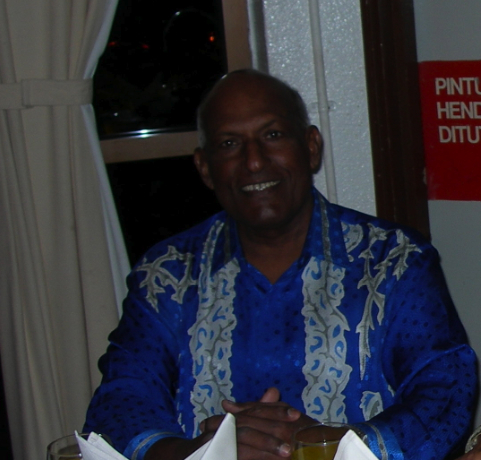
Met Colonel Bakar Salleh for the first time in years at the RAFOC dinner on 3 November 2012. He is fit, stout and never showed his age. What a wonderful meeting. He has the look of a successful elderly statesman  /businessman or Penghulu. Let his recent photo show his good health and contagious smile.

Allen Lai

Saturday, October 27, 2012

Attitude


Attitude is one of the most important traits in soldiering. This episode sums it up


Soldier: Sir, We are surrounded by all sides by enemies.

Major: Excellent! WE can attack in any direction.


Take care

Allen Lai


Monday, October 22, 2012

Robert Lai Kok Nong


Robert Lai


Robert Lai joined 2 ARTY in 1967. He was commissioned from the FMC SSC10th Intake. Robert had served in 1ART, 2ARTY and 3 ARTY and also served in 2 DIV and other staff appointments. He had taken optional retirement as a Major after serving almost 20 years.

We all remember Robert as a no nonsense officer, strict and very professional. He was a keen game hunter, golfer and had participated passionately in many other outdoor activities. He was a very likeable officer and easy to get along with once the ice was broken.

We became fast friends and neighbours in Kem Terendak in the 1980s. He had settled down in Kluang after leaving service. Most will remember that Robert lived an active outdoor life, hunting in the Jamaluang Johore forests , fishing and diving trips in Pulau Tioman.

Robert Lai passed away unexpectedly on 20 October 2012 leaving behind his wife Len, three married daughters and 10 grandchildren.

May you Rest in Peace, Robert. We will miss you and your contagious smiles and laughter.

Allen Lai

Friday, September 28, 2012

Barney Sidambaram and Albert Manaseh


Went through some old photos of mine. These two photos caught my attention.


Barney in 1970


Albert and I on a course in Manly Australia


Barney has now settled down in KL and Albert now resides in Perth, Western Australia.

Will continue to post pictures of Gunners as I get hold of them. Old photos are more meaningful. If anybody has them, I'll help them to post the photo in Sheldrake.

Take care

Allen Lai


Saturday, September 15, 2012

A GATHERING OF THE GEES

Through the initiative of the current Arty SchoolComdt, Lt Col Zulmajdi, all the IGs, TIGs, AIGs past and present shall gather on Saturday 29th September 2012 at the PDGCC for golf and later a Bar B Que. This is quite a momentous event, as it has not been held like this before. The occasion shall be graced by none other than the first Malaysian IG , Lt Gen Dato'Jaafar (Retired). I certainly look forward to this event as an IG who has seen so much over the years at the School and also the unit. In the old days IGs and AIGs were the norm, later came the introduction of TIGs, led by none other than "James" Jamian. He was a "Guru"of sorts to me since my YO days. I have a great deal of respect for this man for his gunnery knowledge and dedication to the Artillery. It would be great to catch up with people like Omar, Supawi, Poh, Aznan, Samsuri and a host of others. The "Gees"in those days were initially trained at Larkhill on the Salisbury Plains in the UK. Then came generations from Deolali, India, Nowshera, Pakistan. There were also some who were instructors esp.officers who attended the Advance Artillery Course at Fort Sill Oklahoma, USA. No matter where they were trained IGs and AIGs were the backbone of technical gunnery for the regiments through the School. When I was with Project Gemas, my pet desire was to ensure that the School had the best in its new home at Gemas. This has yet to materialise, and I hope that the current Gunners shall carry this beacon of hope and relentlessly pursue the agenda  to make sure that The Malaysian Artillery School is built as intended- AN INSTITUTION OF TECHNICAL EXCELLENCE - to serve the Corps and generate future Gunners with the highest level of competencies. Every Corps Chairman and Director of Artillery should take a personal interest to uphold Gunnery Excellence in Malaysia. For "ONCE A GUNNER, WE ARE, ALWAYS A GUNNER". To all the Gees, please make an effort to be there. We need to catch up on some "TIDLERS".